
“Mommy, can I help?”
“Mooommm….What are we having for dinner?”
You’ve heard these lines many times. You may even cringe, with that unspoken answer “no you can’t help…I don’t have time.” Or reluctantly offer up a “frozen pizza and fries” kind of answer.
But you don’t need to feel stuck (or guilty)…what you really need is a game plan!
Teaching kids to cook is one of the most important survival skills you can offer them. It sets the stage for healthier eating and independence, and cost and time savings for both you and them. And with a little intention, it’s easier than you might think! Stay with me as I unpack the benefits of and strategies behind teaching kids how to cook.
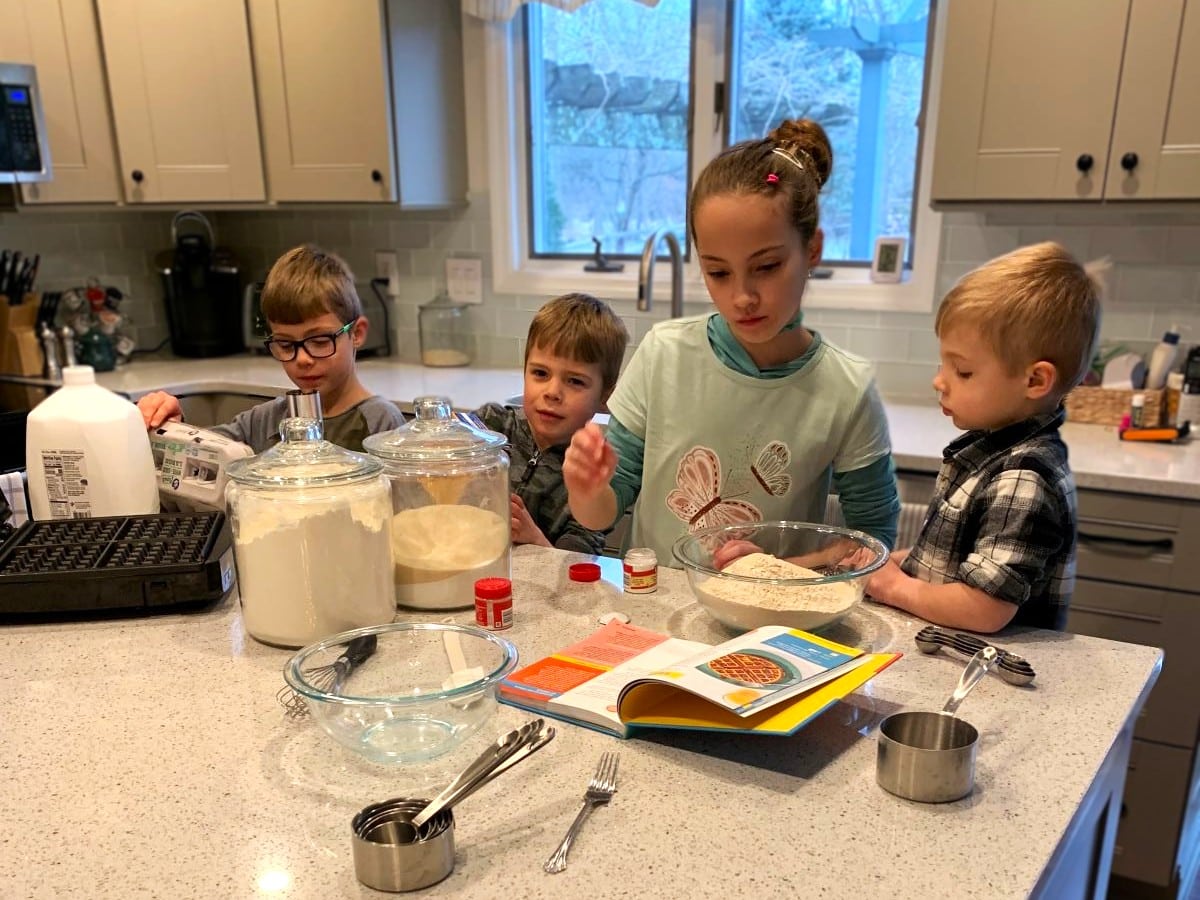
Benefits of Teaching Kids to Cook
In my practice as a dietitian, one of the key parts of my job is what I call “damage control.” I spend much of my day fixing nutrition problems. Time and time again, I’ve found that the root of many of these problems is a lack of cooking confidence.
Many people, old and young alike, no longer go to the grocery store or farmer’s market to physically pick out their food. Those who are cooking at home are relying on packaged foods and shortcut products.
Electronics and extracurriculars are crowding out the time that was once used for cooking. In fact, some adults have never even learned how to cook. And if adults are barely cooking, then who’s teaching the kids??
If this sounds like you and your family, don’t despair!
But before we get started on solutions, let’s get a better understanding of the benefits of teaching your kids to cook to help motivate you to get your kids in the kitchen!
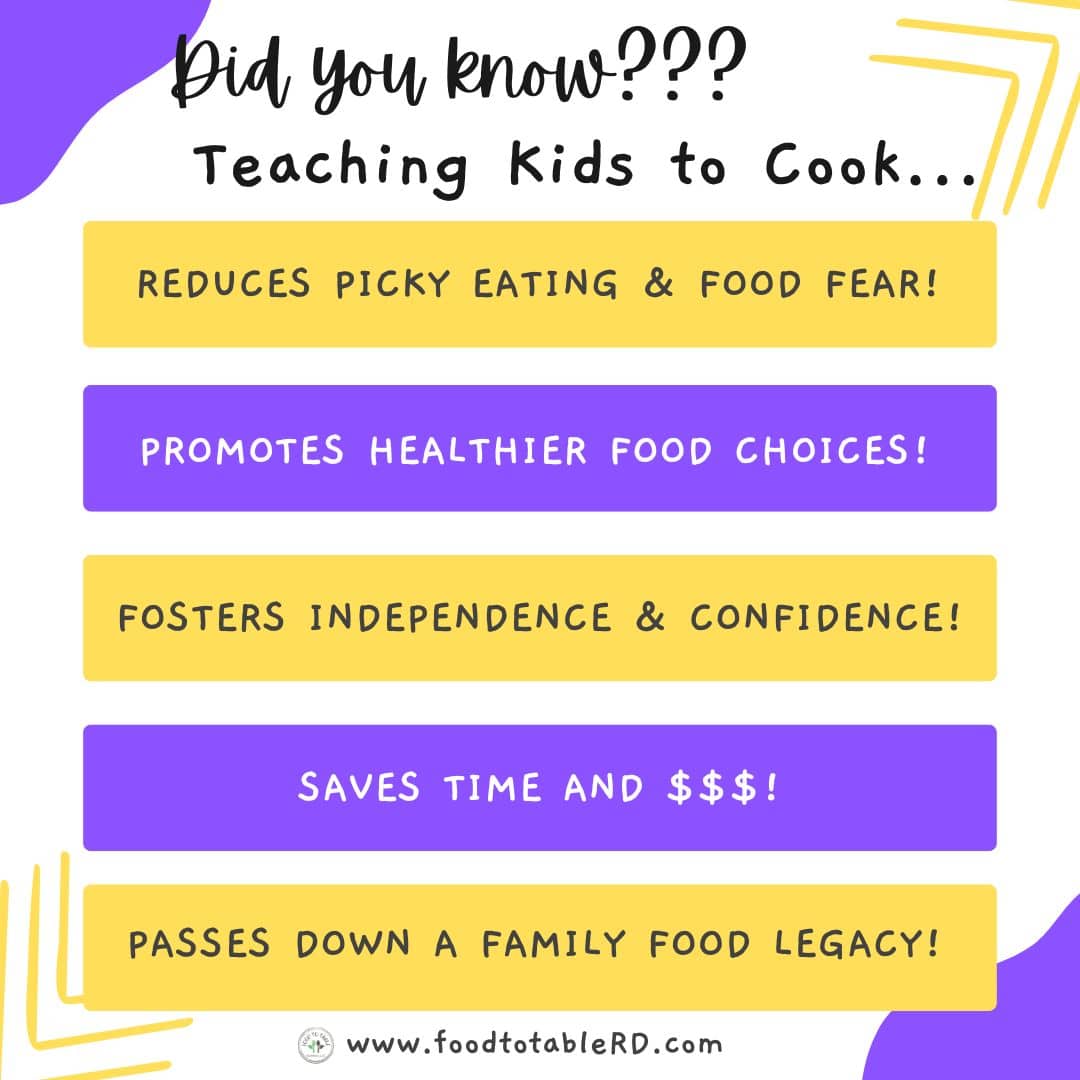
1. Reduces Picky Eating
Managing picky eating can be one of the most challenging tasks of parenting. Since children need to be fed multiple times a day, dealing with selective choices and tantrums around food can be exhausting. You might find yourself offering convenient “comfort” foods that you know your child will eat rather than trying colorful new recipes.
Picky eating can lead to mealtime tension, bribery, limited variety, and an overall negative association with food.
But it’s not all gloom and doom! Creating positive food exposures for kids can slowly undo some of the damage that’s been done. Better yet, implementing ongoing positive food experiences at a young age can prevent nutrition problems from ever starting. Studies show that getting kids excited about food by letting them look up recipes, pick out ingredients, and teaching them to cook is one of the best ways!
Kids that feel safe and excited around food are less likely to be picky and are much more likely to grow into adventurous eaters.
2. Promotes Healthier Food Choices and Overall Health
Teaching kids to cook is also an amazing way to increase the healthy food choices in their diet. Cooking with whole, unprocessed or lightly processed ingredients supports your child’s growth and development and prevents many chronic diseases in childhood and adulthood.
Cooking from home allows you to teach your child about the importance of balanced food groups and a colorful diet. It can take away the false stigma that “healthy food doesn’t taste good” and show your kids that healthy foods can be flavorful and delicious. And when kids learn to cook healthy foods when they’re young, they’re more likely to carry these habits and mindsets into adulthood.
3. Fosters Independence & Confidence
One of my favorite things to watch as my kids grow up is their blossoming confidence and independence as they learn new skills. It’s not that I don’t want them around forever, but it gives me a sign that I’m setting them up for success down the road.
In regards to food, teaching your kids to cook fosters both confidence and independence. The fact that you’re right there teaching them gives them confidence in their cooking skills and food choices. This confidence leads to independence by showing them that they’re capable of making positive food choices by themselves.
This independence and confidence doesn’t stop with food though. When kids are independent and confident in one area of life, they are more likely to feel capable in other areas of life too. So if you want to keep your adult child from living in your basement one day, teaching them to cook is one step in the right direction!
4. Saves You Time & Money
What parent doesn’t want to save time and money? Would you really believe that teaching your kids to cook can do both?! It’s often a matter of perception, and sometimes I have to do actual calculations with parents to persuade them, but it really is true (there’s even research to support it). However, there’s usually an upfront time investment that you have to be willing to make.
Time Savings
If you invest the time when they’re young, I can almost 100% guarantee that by age 12 they will be cooking entire meals by themselves. If you calculate the time savings of your child cooking one meal a week from age 12-18 (and multiply this if you have more than one child), you can see very quickly how this will pay off.
Cost Savings
From a financial perspective, teaching your kids to cook will also pay off both now and in the future. If you don’t believe me, I’ve taken the guesswork out of the equation and crunched the numbers for you. The following calculations are based on the cost of average fast food and grocery store food purchases for a family of 6 in 2025.
An average fast food or takeout meal costs $50-70. These food choices commonly have lengthy ingredient lists, food additives, high sodium, fat and sugar, and limited fruits and vegetables.
An average convenience food dinner (purchased from the grocery store) dips down to $23-25 per meal. These products, though still processed tend to have fewer ingredients, aren’t deep fried and have overall less sodium, fat and sugar. They also have the potential to include more colorful fruits and vegetables.
Lastly, a home-cooked, whole foods meal (purchased from the grocery store using conventionally grown products) drops to $17-18 per meal. Using organic ingredients would bump up the cost closer to $23-25 per meal.
With some basic math, you can discover that cooking meals from home saves an average of 70% per meal. That means that home-cooked (even organic) meals are ¼ to ⅓ of the cost of cheap takeout! Subbing in even one home-cooked meal per week can easily save you over $100 per month! If you’re still not convinced, stick with me for one more benefit…
5. Passes Down a Positive Food Legacy
A final and more sentimental than logical benefit to teaching your kid(s) to cook is that of legacy and tradition. Many families have fun food traditions that center around holidays or special occasions. Some of these traditions may even be from your grandparents, great grandparents or country of origin.
Whether it’s a special recipe or an entire celebratory menu, these traditions are valuable and can’t always be quantified from a financial or time standpoint. These recipes may encourage your children to celebrate their religion or heritage. Or they may simply be a reminder of special family memories.
Don’t think that your child doesn’t want to or need to learn these traditions. I work with countless adults who wish they had been taught to make their special family recipes, and your child will likely not be an exception!
With all of these benefits in mind, hopefully one or more have caught your attention and you’re ready to dive in. But before you and your kids get too messy, let’s make sure that you have the right kitchen essentials on hand.
Essential Cooking Gear for Kids
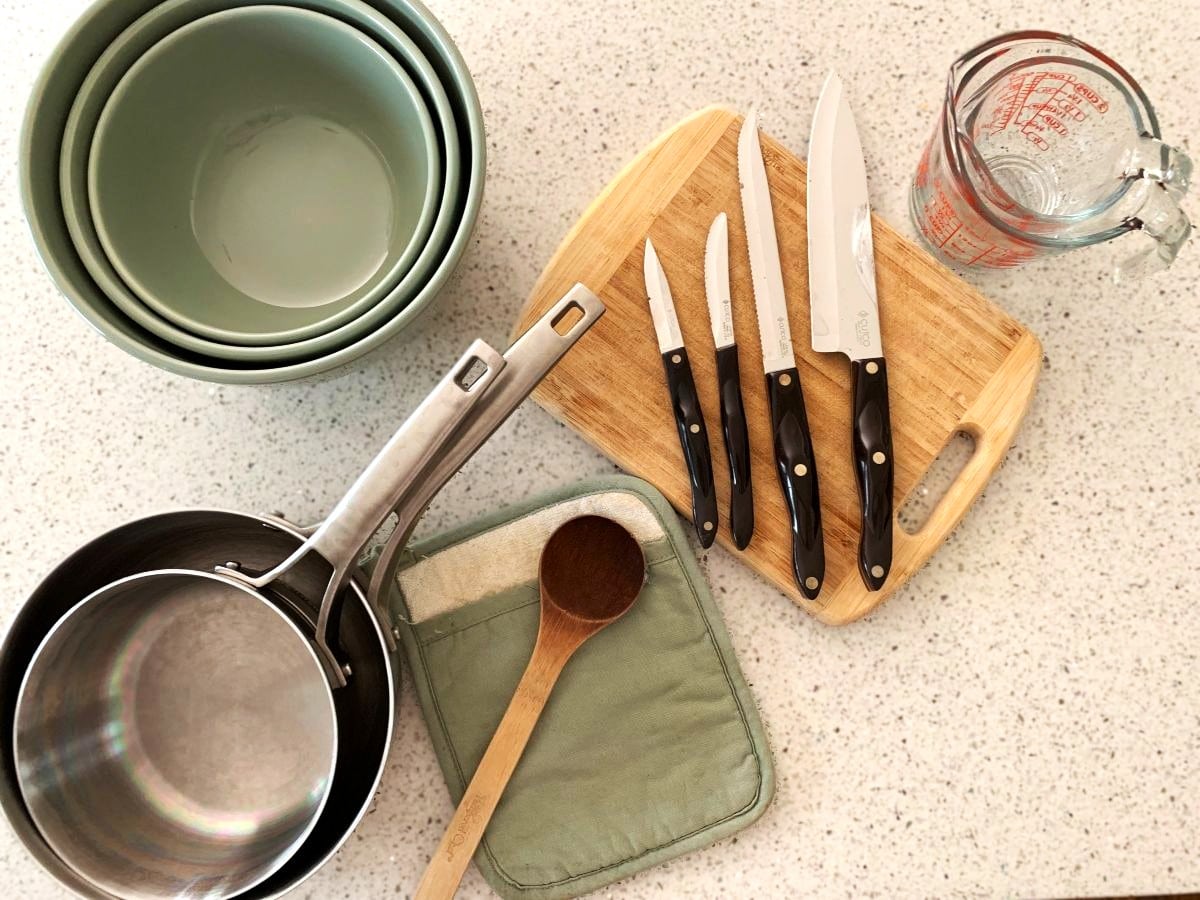
Walk down any kitchen aisle, and you’ll find an endless number of kitchen gadgets, which can get pricey and may or may not be needed. Kitchenware can also expose kids to a variety of unnecessary toxins, so to reduce exposures, I recommend using glass, stainless steel, cast iron, ceramic, silicone and wooden/bamboo materials as much as possible (download my free Toxin Swap Guide if you need more ideas). The following are some of the bare essentials to get your started:
- Mixing bowls
- Dry measuring cups
- Liquid measuring cups
- Measuring spoons
- Can opener
- Vegetable peeler
- Mixing spoon(s)
- Whisk (large fork will work fine)
- Mixing spatula
- Flipping spatula
- Cutting board (having a few sizes can be nice, but not necessary)
- Sharpened knives (at least 1 large and 1 small)
- Various sizes of pots & pans (ideally 4 or more)-saute pan/skillet, large pot, saucepan
- Baking sheet(s)
- Food thermometer
- Hot pads
- Apron (optional)-If you really dislike messy cooking, this may be a non-negotiable
Optional (Fun) Kitchen Gear for Kids
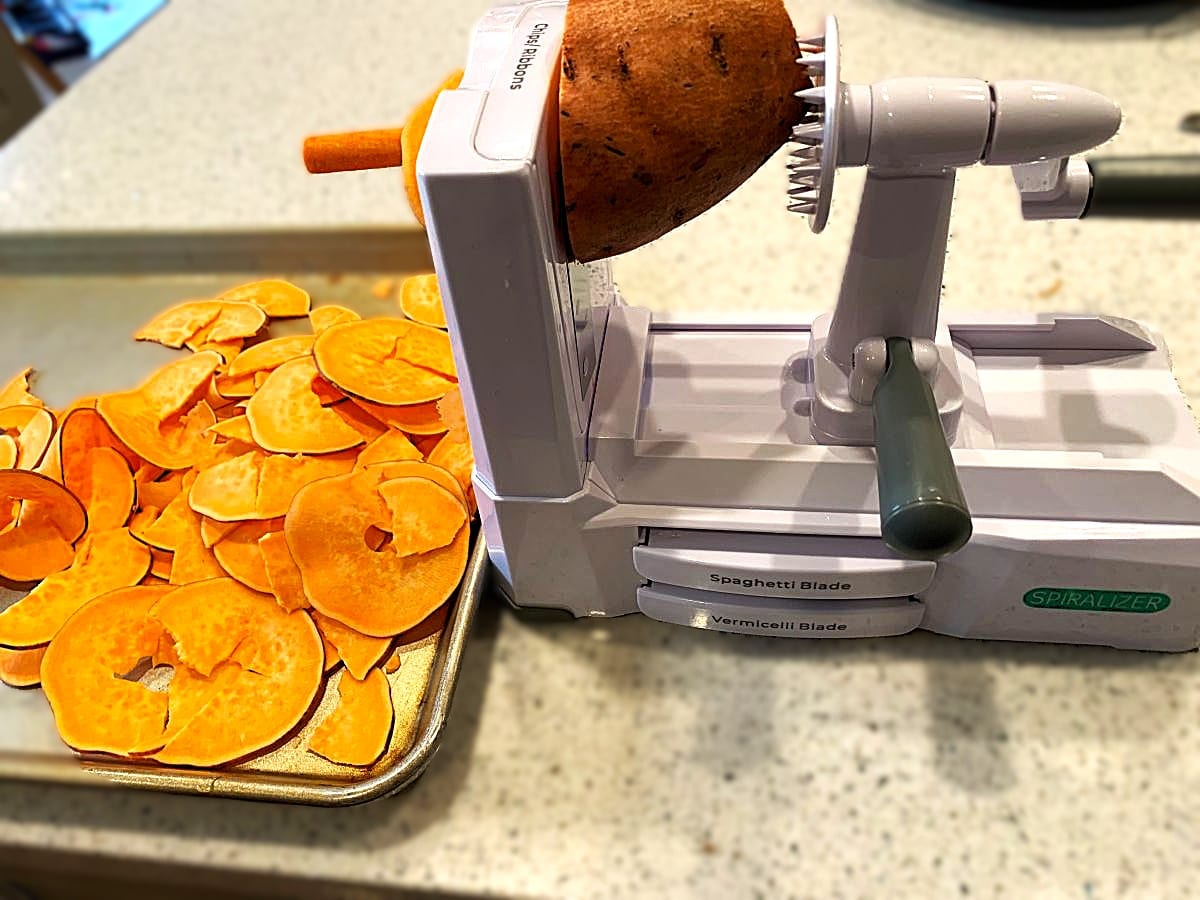
The following are extra gadgets that aren’t necessities but will make for an easier and more fun kitchen experience for kids:
- Blender
- Spirilizer
- Citrus juicer
- Garlic Press
- Citrus zester
- Cheese grater
- Mesh strainer
- Rolling pin
- Tongs
- Colander
- Griddle
- Dutch oven
- Mixer and/or hand mixer
- Muffin tins
- Loaf pan
- Cookie cutters
- Icing piping bags
- Cooling rack
Kid’s Cookbooks & Recipes
Along with cooking gear, I highly recommend investing in a few kid’s cookbooks. They’re a great hands-on way to foster enjoyment in the kitchen. Your local library can be a nice place to try out some free options before buying. Below are some of my favorite kid-friendly cookbooks and recipe blogs to get you started:
- Junior Chef Master Class
- Kids Can Cook Anything
- The Complete Cookbook for Young Chefs
- Carrots & Cookies
- Dr. Yum
- MJ & Hungryman
- Super Healthy Kids
And don’t forget to check out our regularly updated family-friendly recipes, complete with kid-friendly cooking steps and allergen-friendly substitutions.
10 Simple Steps to Teaching Your Kids to Cook
Now that you’ve got your supplies ready, it’s time to start teaching!
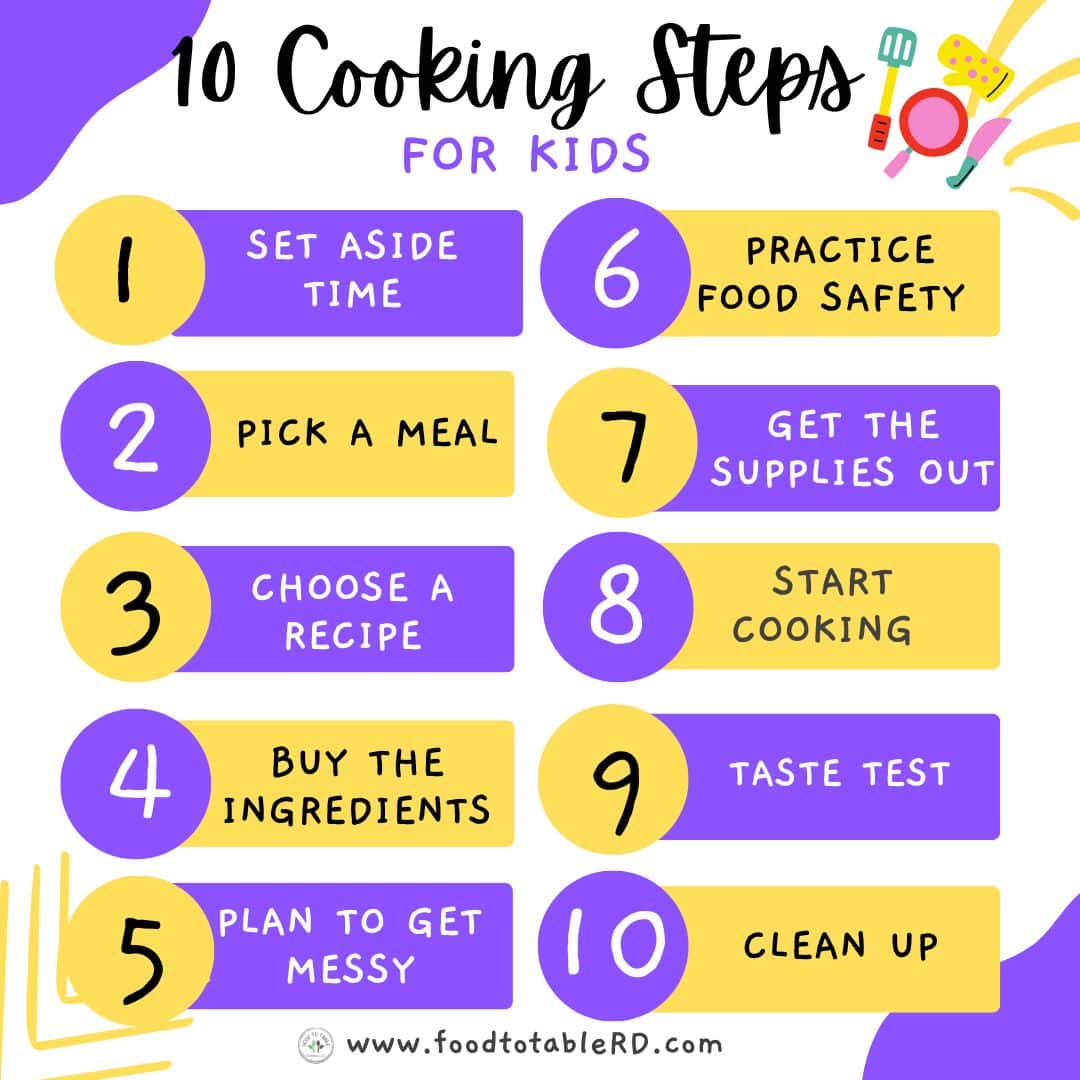
1. Set Aside Time
Be intentional by looking at your planner or google calendar, and decide what works best for your family’s schedule. Weekends are often a good place to start. If needed, schedule a specific day and time in your phone or planner to make it happen!
2. Pick A Meal
This can be very flexible. Breakfast and lunch meals tend to be simpler for beginners (i.e. scrambled eggs, pancakes, grilled cheese etc) and may not require a recipe.
3. Choose A Recipe
If you’re well-versed in the kitchen, you may not need a recipe for simple ideas. However, letting your kids look through a physical cookbook can give them some excitement and autonomy.
4. Purchase or “Pick” the Ingredients
When possible (at least once/month), take your child to the grocery store, farmer’s market or backyard garden to pick out the ingredients for the recipe. Knowing where food comes from and how to select it is an important step in the cooking process.
5. Plan to Get Messy
You may need some mental and physical preparation to allow for a mess. A small table or stepstool are helpful for young children. Make sure the counter is clear and the trash can is nearby.
6. Food Safety
Be sure that your child’s long hair is pulled back, their sleeves are rolled up and their hands are washed. Depending on the recipe, keep a food thermometer handy.
7. Prepare the Supplies
In French, this is called “mise en place” or “everything in its place.” Just prior to cooking, read the recipe with your child to go over the steps and determine how much time will be needed. Help your child get out all of the ingredients, kitchen tools and cookware used in the recipe.
8. Begin Supervised Cooking
This is very age and skill-level dependent. Young children always need supervision, but if they’re excited and confident, safely let them experiment and see what they are capable of. Older children are more competent, but if they aren’t confident, they will need some gentle coaching and instruction. A good tip for older kids is to model a quick demo for them and then let them do the rest.
9. Taste Test
This is the fun part, and can simply be incorporated into eating the meal. But every aspiring chef needs to taste their creation. If your child is a selective eater and is hesitant to try what they made or if you want to make it more fun for the whole family, you can use my free Food Explorer Worksheet as a guide.
10. Clean Up
Lastly, every good chef needs to learn to clean up. Clean up tasks will vary based on your child’s age. Anything from wiping counters and dust panning the floor to washing and drying the cooking dishes counts.
Age-Appropriate Cooking/Baking Skills for Kids
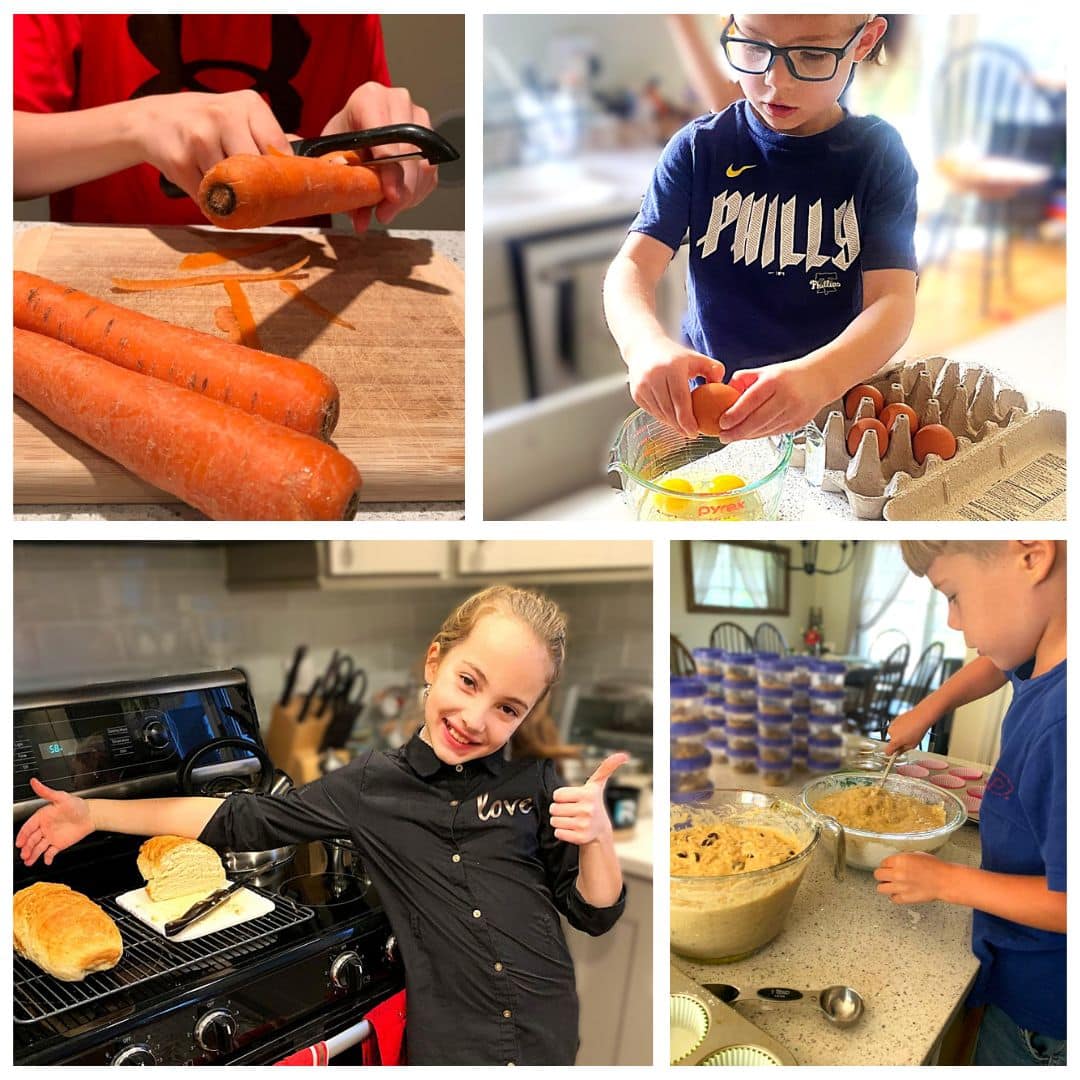
As with other developmental skills, a child’s kitchen skills are dependent on age, developmental readiness, and previous exposures/experiences. If you think your child is behind, don’t wallow in parent guilt, but rather continue to work on more exposures.
Keep in mind that some steps build on each other, so make sure that the earlier steps are mastered before moving on. Also, remember that the younger your child is, the more supervision and teaching they will need. Click here to download a free Kid’s Cooking Skills Checklist (clean up skills included!)
2-3 Year Olds
- Measuring ingredients with cups and spoons
- Mixing/whisking batters with a spoon or whisk
- Sprinkling chopped herbs and shredded cheese
- Using a salad spinner and citrus press
- Kneading dough
- Sprinkling salt or mild seasonings
- Making/decorating cutout cookies
- Turning the blender on & off
- Throwing away cans and wrappers
- Emptying the dishwasher (assisted)
4-5 Year Olds
- Picking herbs
- Washing fruits and vegetables
- Cracking and whisking eggs
- Stirring or mashing ingredients
- Dropping in smoothie ingredients (supervised)
- Spirilizing (supervised)
- Greasing pans
- Pouring batter (muffins/pancakes)
- Rolling cookie dough into balls
- Rolling out dough with rolling pin
- Beginner knife safety-use table knife to cut soft fruits*
- Wiping counters
- Setting the table
6-7 Year Olds
- Using mixer
- Separating eggs
- Peeling fruits and vegetables
- Grating cheese
- Making scrambled eggs
- Making lunches
- Intermediate knife safety-advance to small paring knife (if developmentally appropriate)*
- Dust panning the floor
- Washing dishes (assisted)
8-9 Year Olds
- Using a can opener
- Making pancakes (with little to no assistance)
- Spiralizing (unsupervised)
- Meal planning
- Making a grocery list
- Reading recipes/making simple recipes
- Continue teaching knife safety, advancing as appropriate*
- Pouring mealtime drinks
- Drying dishes
10-12 Year Olds
- Sauteing
- Baking
- Decorating cakes
- Making omelets
- Making smoothies
- Creating their own recipes
- Chopping with sharp kitchen knives*
- May begin unsupervised knife usage as appropriate*
- Loading the dishwasher
- Washing, drying and putting away dishes
- In this age range, experienced kitchen helpers may be able to make entire recipes by themselves
*Knife Safety For Kids
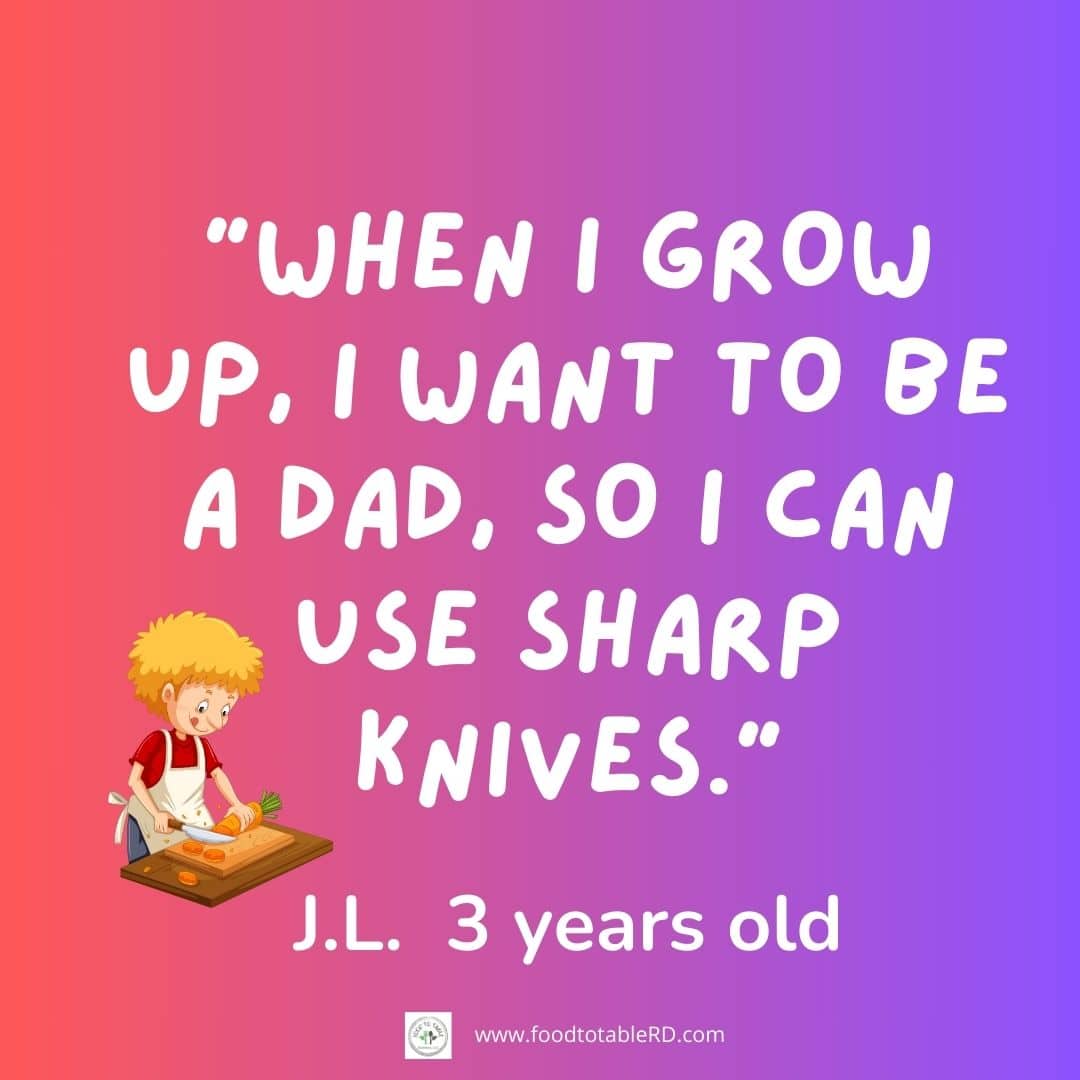
As you can see from the above skill lists, knives are essential to cooking and can help your child to become more efficient in the kitchen. Of all the kitchen skills, teaching your kids to use knives skillfully and safely is one of the most important. Learning knife safety is an ongoing process that builds on itself. If your child is eager to learn, don’t let your fear get in your way. The following are some tips for good knife safety:
Safety Basics
- Safe Fingers-Fingertips should always be curled in when gripping the food item to be cut.
- Cutting Board-Use a stable cutting board to prevent slipping when cutting. If needed, place a rubber jar opener underneath for better grip.
- Feet on the Ground-Knife control is better when a child’s feet are on the ground. Let smaller children practice seated or standing at a kid-sized table. Older children should be tall enough to have a good view of the counter when standing.
- Cut Away (from your body that is)-Teach your child to keep the knife tip pointed away from their body.
- Keep Sharp Knives Sharp-It’s been said that the most dangerous knife is a dull one. As your child advances to sharper and larger kitchen knives, be sure that the knives are properly sharpened.
- Set Knives Down-When not in use, teach your child to set their knife down on the cutting board or countertop.
- Knives Out (of the sink that is)-Always leave knives out of the sink until they are ready to be washed to avoid accidental injuries.
- Supervise-Until your child is closer to 12 years old and has shown proficiency in both knife safety and skills, it’s very important to supervise your kids with kitchen knives.
Skill Progression
- Start with table knives to get your child used to how a knife works. Let them practice by cutting up soft foods like bananas, peaches, pancakes or toast. This can be done on a plate and doesn’t require a cutting board.
- Advance to paring knives-These knives are small enough to learn knife control but not sharp or large enough to cause a serious injury. Let your child practice on slightly firmer fruits like kiwi, strawberries or pears.
- Move on to larger knives including vegetable knives, steak knives, serrated knives and chef knives. Teach your kids how to choose the right knife for the job.
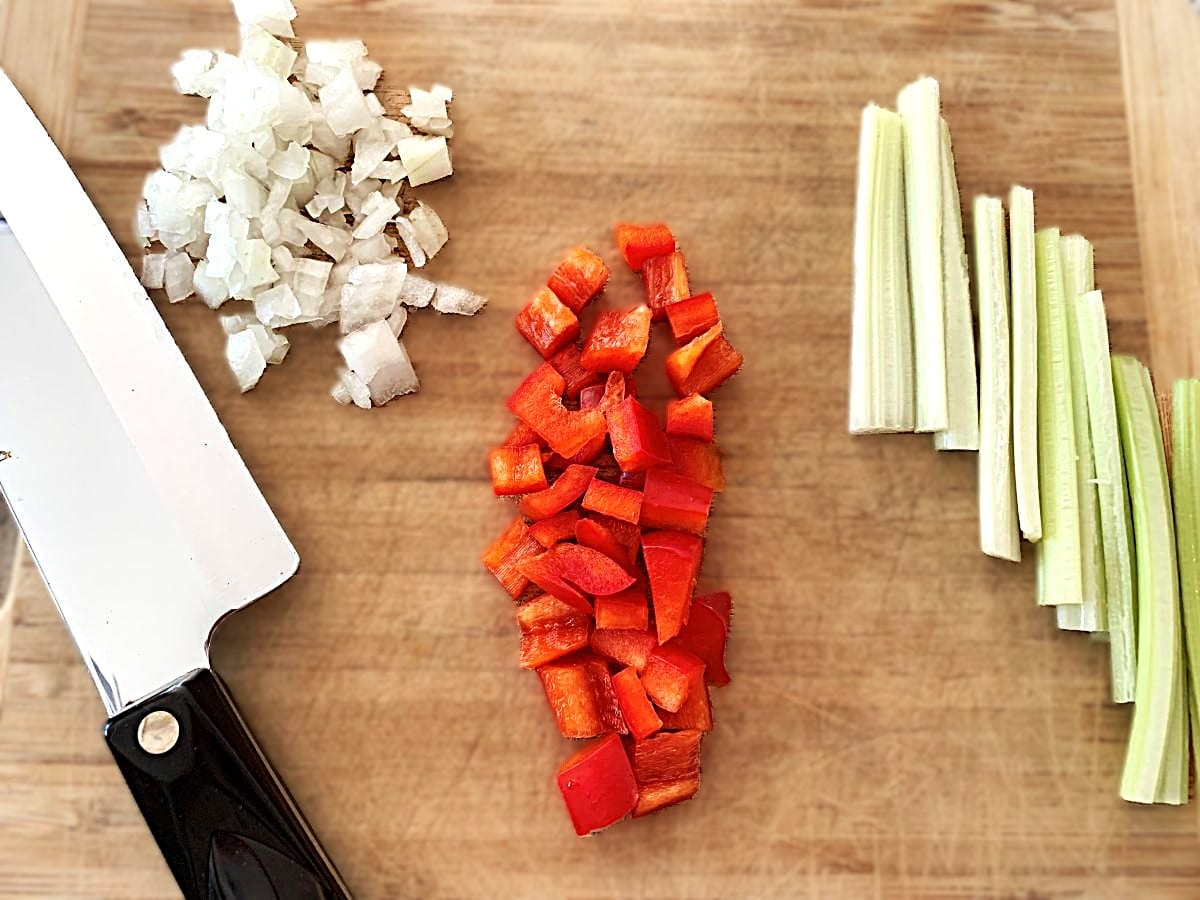
- Slice & Dice-Teach your kids how to do different cuts like slicing, dicing & chopping.
Once you feel that your child has mastered the various knife safety and skill techniques, they may be ready to graduate and begin cooking on their own!
Catching Up on Delayed Cooking Skills
If your teenager or young adult doesn’t know how to cook and you feel like you “missed the boat,” don’t despair, it’s really never too late to catch up on cooking skills.
- Start with simple recipes (see more ideas below).
- Use visuals like cookbooks, step-by-step pictures and/or videos to help them get a feel for what the process will look like.
- Practice knife skills-Make sure they have at least 1 large and 1 small good kitchen knife to practice with.
- Use the cooking skills lists above as a checklist to work through. Older kids and teenagers will be able to master a few skills at once.
- Use modeling and coaching approaches to allow for their autonomy (either from a quick parent demo or a cooking video).
Let them Cook!
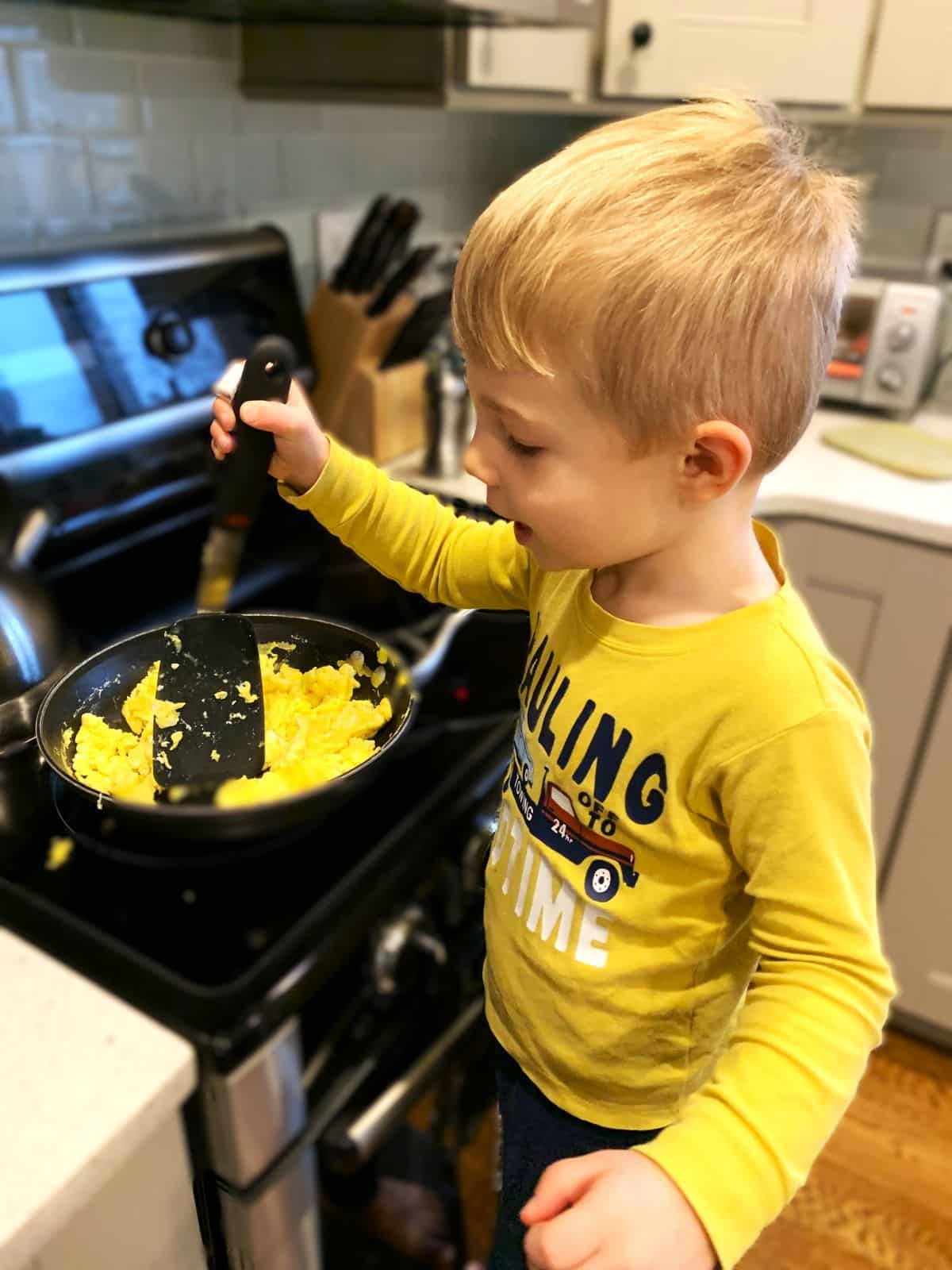
Giving kids the freedom to make food opens doors of opportunity for independence, creativity and healthy habits. Depending on your child’s age and cooking experience, they may or may not need supervision. Here are some simple ideas to get you and your kids started:
Breakfast
- Scrambled eggs
- Avocado Toast
- Pancakes
- Fruit syrup
- Oatmeal
- Smoothies
Lunch
- Grilled Cheese
- Quesadillas
- Loaded Nachos
- Pita Pizzas
- Fresh-Squeezed Lemonade
Dinner
- Spaghetti and Meatballs (or meat sauce)
- Tacos or Burrito Bowls
- Chili
- Skillet Dinners
- Mashed Potatoes
- Roasted or spiralized veggies
- Salad
One Last Bite
Now that you’ve learned the benefits of teaching your kids to cook and how “easy” it can really be, it’s time to roll up your sleeves, grab a fun hat and get messy!
Remember:
- Make sure you have all the kitchen gear you need to get started.
- Find at least one recipe to try, and buy the ingredients.
- Look for specific age-appropriate ways your child can help with the recipe.
- Sharpen up your child’s knife skills by letting them practice on soft foods.
- Use modeling and coaching techniques when teaching your older kids to cook.
- Let them cook…starting with simple steps and advancing to full meals.
You got this! And I can assure you that you won’t regret it!!
Need more Support?
If you feel that your child has already had too many adverse food experiences, and you’re not sure how to navigate recipes and cooking, check out these articles for more ideas:
High Protein Foods for Picky Eaters
Or if you’re a busy mom struggling to find time to plan, you might find Meal Planning for Busy Moms a helpful read.
And as always, if you need 1:1 support, Food to Table Nutrition offers individualized nutrition consultations for kids and families struggling with nutrition challenges.